
Online casino lobbies used to be built around pure category logic. Slots sat in one block, roulette in another, blackjack in a third, and the only real difference between one operator and the next was how many titles each one could stack on the page. That model still exists, but it no longer feels strong enough on its own. In 2026, the more interesting shift is not simply “more content,” but better-packaged content: libraries shaped around recognizable worlds, familiar brands, presenter-led live formats, and game-show mechanics that feel closer to entertainment platforms than to old-style digital casino shelves. The renewed Hasbro push into gambling through licensing deals, especially Evolution’s exclusive online live casino and slot partnership, fits directly into that change.
That matters because branded content is no longer a side attraction. MONOPOLY Live has already become one of the defining titles in live casino entertainment, while MONOPOLY Big Baller has pushed the concept further by blending bingo-style progression, augmented reality, and a game-show atmosphere. Evolution has also signaled a broader 2026 pipeline around Monopoly and other Hasbro properties, including titles such as Game Night, Monopoly Filthy Rich, and Monopoly Roulette. When operators build libraries around these names, they are not just adding games. They are giving players an easier way to recognize what the product is supposed to feel like before they place a single bet.
Why branded game libraries feel more relevant now
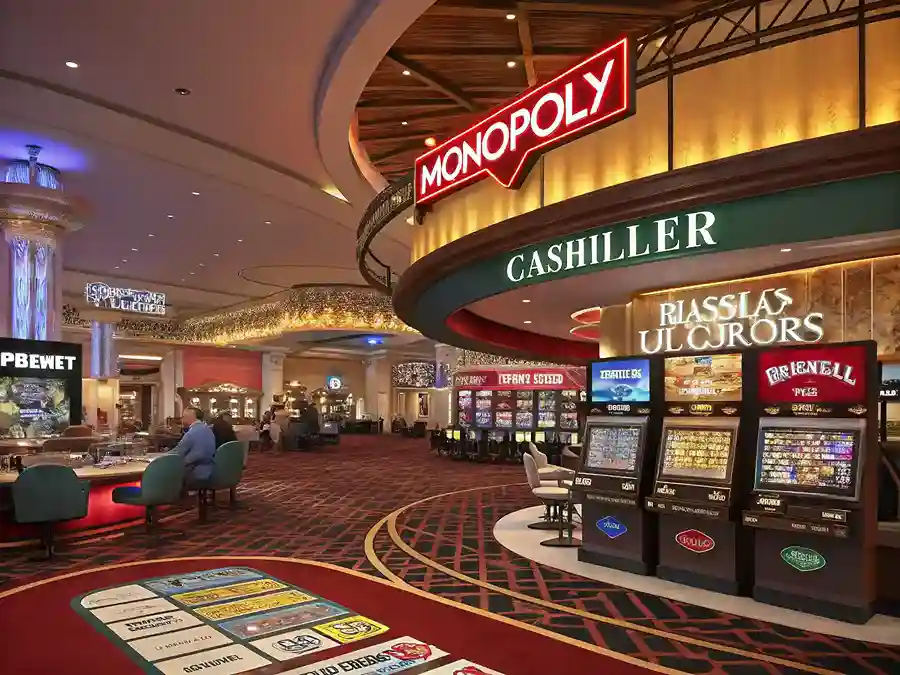
The idea of a themed casino section is not new, but the reason it works today is sharper than it was a few years ago. Players now move across streaming, mobile gaming, short-form video, social play, and live entertainment in one continuous digital routine. In that environment, a casino lobby built only around technical labels can feel flat. A branded or thematic library speaks a language players already understand: a known property, a recognizable visual tone, a host-led format, and a promise that the session will have some personality. That is one reason why branded game-show products and cross-format content libraries have become more visible across supplier roadmaps and industry discussions going into 2026.
Hasbro content is especially well suited to that approach because it brings instant recall. Monopoly is not a new invention that needs to be explained. The board, the wheel, the Mr. Monopoly character, the sense of movement and reward, even the simple pleasure of familiar iconography all do a lot of work before the player learns a paytable. That is valuable for operators because the first battle in a crowded lobby is not retention or conversion. It is recognition. If a user lands on a game tile and already understands the emotional tone of the experience, the barrier to entry becomes much lower.
The same logic explains why live game shows have gained so much ground. Evolution’s current live game-show range prominently includes Crazy Time, Funky Time, Mega Balls, Dream Catcher, Lightning Storm, MONOPOLY Live, and MONOPOLY Big Baller, while Pragmatic Play continues to position products such as Mega Wheel and Sweet Bonanza CandyLand as live entertainment hybrids rather than plain table-game alternatives. These are not niche curiosities anymore. They are headline products designed to sit at the front of the lobby and define a brand’s tone.
How live-show formats changed player expectations
Traditional live casino products were built on realism. The pitch was simple: real dealers, real cards, real wheels, real tables. That still has value, especially for blackjack and roulette players who want a close digital version of the land-based experience. Yet game shows changed the emotional center of live casino. They replaced strict simulation with spectacle. Instead of asking the player to appreciate authenticity alone, they added anticipation, studio design, presenter charisma, multipliers, bonus layers, and a much clearer sense of event. That shift is one of the biggest reasons themed libraries have become more important.
A title like MONOPOLY Live works because it borrows the visual and emotional structure of a television format. A host stands at the center of the action, the wheel provides an instantly legible mechanic, and the Monopoly bonus round gives the session a narrative spike rather than a static result screen. MONOPOLY Big Baller takes that same principle and pushes it into a louder, more kinetic space with bingo cards, AR elements, and higher-energy pacing. The product is no longer just “something to bet on.” It is “something to watch unfold.”
That same pattern can be seen outside Hasbro titles. Crazy Time became a standout not because it copied roulette or baccarat more efficiently, but because it built a memorable stage identity around a money-wheel structure and layered bonus rounds. Funky Time leaned into music, mood, and visual atmosphere. Sweet Bonanza CandyLand turned a known slot universe into a live game-show environment with presenters, a dedicated studio, and hybrid physical-digital production. The message behind all of them is consistent: if a game can feel like an event, players remember it better and return to it more easily.
That has changed what operators want from suppliers. It is no longer enough to ask for more games. Operators increasingly need front-page games, anchor games, and games that help define sections of the lobby. Themed libraries solve that problem. They make the content easier to browse, easier to market, and easier to connect with a specific type of player, whether that player arrives for nostalgia, entertainment, community energy, or simple visual familiarity.
The games that are shaping the trend
The trend becomes clearer when the actual titles are placed side by side. What stands out is not only the use of big brands, but the way each title gives operators a distinct hook.
Before looking at the table, it helps to separate three groups. The first group contains established Hasbro-linked live hits already associated with strong recognition. The second group includes announced or emerging Monopoly titles in the 2026 pipeline. The third group features non-Hasbro live-show titles that prove the wider market has moved in the same direction. Together, they show why themed libraries are no longer a cosmetic choice but a product strategy.
| Game | Supplier | Format | Why it matters in a themed library |
|---|---|---|---|
| MONOPOLY Live | Evolution | Live game show | Uses one of the best-known board game brands in the world and translates it into a live wheel-and-bonus format that is easy to understand and market. |
| MONOPOLY Big Baller | Evolution | Live game show / bingo-style hybrid | Expands the Monopoly identity into a louder, more social-feeling experience with AR and card-based progression. |
| Monopoly Roulette | Evolution | Announced live title / 2026 roadmap | Shows that the Monopoly brand is being stretched beyond one flagship game into a broader family of products. |
| Monopoly Filthy Rich | Evolution | Announced live title / 2026 roadmap | Suggests a more ambitious branded expansion strategy rather than a one-off licensing move. |
| Game Night | Evolution | Announced live title / 2026 roadmap | Reinforces the idea of a reusable live entertainment framework around familiar board-game energy. |
| Crazy Time | Evolution | Live game show | A benchmark for how a live casino title can become an entertainment brand in its own right. |
| Funky Time | Evolution | Live game show | Shows how strong visual identity and host-driven mood can make a title memorable beyond mechanics. |
| Lightning Storm | Evolution | Live game show | Demonstrates the market’s appetite for highly produced multiplier-driven wheel formats. |
| Sweet Bonanza CandyLand | Pragmatic Play | Live game show | A clear example of a successful slot universe being transformed into a live-show product. |
| Mega Wheel | Pragmatic Play | Live game show | Proves that TV-style wheel entertainment remains a durable entry point for casual players. |
What this table shows is simple but important. The industry is no longer relying on one heroic branded title to do all the work. Suppliers and operators are building clusters: one recognizable flagship, several adjacent titles, and a wider supporting cast of game shows that teach players how to navigate this kind of entertainment. Once players get used to host-led wheel games or branded bonus rounds, it becomes much easier to cross-sell them into another themed section. That makes the library itself more valuable, not just the individual release.
Why operators like these sections so much
From an operator’s point of view, themed libraries solve several commercial problems at once. They create a stronger front page, support clearer merchandising, improve recognition for new users, and give marketing teams more usable material than a generic collection of isolated game tiles. A banner for “Live Roulette” can be useful, but a banner for “Monopoly and game-show favourites” tells a more vivid story in fewer words.
There is also a retention advantage. A themed section encourages a player to stay within one mood or entertainment lane instead of dipping into a single title and leaving. If someone enters through MONOPOLY Live, the operator can keep that energy going with MONOPOLY Big Baller, a new Monopoly release, or adjacent live shows such as Crazy Time or Mega Wheel. That flow matters because the real business goal is not only first-click appeal. It is session depth.
The format also works well across user segments. A player who usually prefers slots may still feel comfortable trying a live game show if the branding is familiar. A live casino regular may try something more playful if the production values are strong. A casual user who does not want to study a complex table-game interface may still enjoy a simple wheel-based format with a presenter explaining what is happening in real time. In other words, themed live libraries make the lobby less intimidating without making it feel simplistic.
The strongest sections usually share a few traits:
- They use recognizable names rather than abstract category labels.
- They group games by mood and experience, not only by technical type.
- They place one flagship title at the front and support it with adjacent options.
- They keep the visual design consistent enough that the section feels intentional.
- They make it easy for casual players to understand why each game belongs there.
That structure is especially effective for branded content because the brand itself helps carry the section. Monopoly is the clearest example in 2026, but the broader principle extends to candy-themed, music-themed, or studio-show experiences as well. A library becomes more memorable when its parts feel connected.
Why Hasbro matters more than a simple licensing story
It would be easy to treat the Hasbro angle as just another licensing headline, but that would miss the deeper point. The reason this partnership matters is not simply that a famous toy and board-game company entered a new commercial agreement. The real significance is that Hasbro properties fit the current direction of live casino unusually well. They are visual, multigenerational, easy to explain, flexible across formats, and strong enough to support both nostalgia and reinvention.
Monopoly in particular has turned out to be more adaptable than many people expected. It works as a bonus wheel game, a presenter-led studio event, a bingo-style hybrid, and now a broader roadmap of live and RNG extensions. That is exactly what operators want from a branded property. They do not want one good launch and then silence. They want a brand that can behave like a content universe.
This is also where the phrase “themed library” becomes more useful than “branded game.” A branded game can succeed on its own, then fade into the general catalog. A themed library has longer life because it can grow. It can absorb sequels, side titles, remixes, regional promotions, lobby takeovers, seasonal campaigns, and new-user funnels. With Evolution holding exclusive online live casino and slot rights for Hasbro properties, the market is now positioned to treat Monopoly and related names as an expandable entertainment lane rather than a single novelty.
That strategy also fits the modern supplier model. Evolution is not only a live casino specialist; it positions itself across live casino, live game shows, slots, and related brands within a wider product ecosystem. When a supplier has that kind of portfolio structure, it can use a strong license more creatively across formats and release calendars.
What this trend means for players and the year ahead
For players, themed libraries are likely to make online casino browsing feel more curated and less mechanical. That does not change the underlying need for responsible play, careful bankroll limits, or attention to game rules and volatility. What it does change is the front-end experience. The lobby feels more like a content platform. Some users will love that because it reduces friction and adds entertainment value. Others may still prefer classic live blackjack or straight roulette, and those games are not going anywhere. The shift is not replacing the core casino. It is changing how operators package discovery around it.
For the rest of 2026, the most likely winners will be operators that treat these libraries as living sections rather than short-term promotional banners. That means regular refreshes, smart cross-linking, better category naming, and a willingness to build small ecosystems around standout releases. Monopoly is the obvious case study right now because it combines a proven hit in MONOPOLY Live, a successful expansion in MONOPOLY Big Baller, and a fresh roadmap of additional titles signaled for the year.
The wider lesson goes beyond Hasbro. Live game shows have shown that players respond strongly to products that feel staged, hosted, branded, and easy to understand. Themed libraries are the natural next step because they turn isolated hits into navigable entertainment spaces. That is why they feel like a real trend rather than a passing design fad. They match the way digital audiences already browse, remember, and return.
In that sense, casinos with Hasbro games and live shows are not interesting simply because the titles are famous. They are interesting because they reveal where the industry is going. The modern online casino lobby is becoming less like a spreadsheet of products and more like a showroom of experiences. The operators that understand that shift early will have an easier time standing out.